
Plain English Explainer
The UK changed its clinical trial rules. The part that matters most isn't the law.
They made inclusion strongly expected, not required. Most teams heard "not required" and stopped reading.
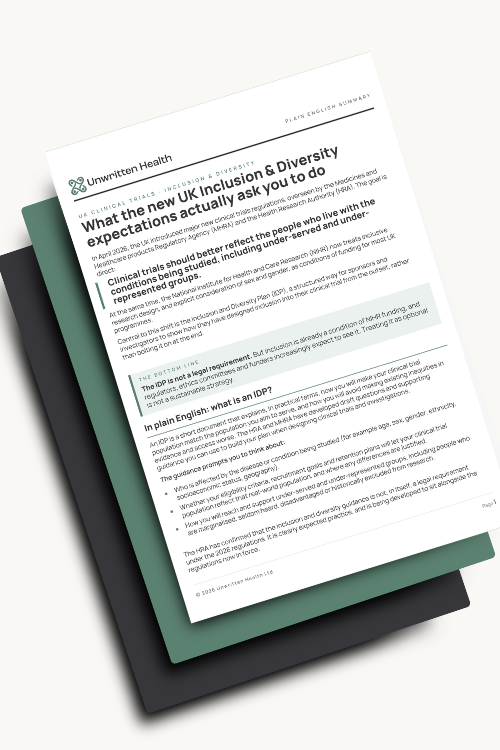
Download the plain-English guide that shows clinical research teams what the Inclusion and Diversity Plan actually asks of them, before it costs a funding round or a recruitment timeline.
From April 2026, the UK introduced its biggest clinical trials reform in over twenty years. The parts that are now law got the attention: public registration, results publication, combined review. The Inclusion and Diversity Plan, which is not law, did not.
The HRA has said plainly that the IDP is not a legal requirement, so it slid to the bottom of the pile. But when a protocol's eligibility criteria, visit schedule or site geography quietly exclude under-served and under-represented populations, teams don't find out until recruitment stalls or a funder pushes back. By then the protocol is fixed, the sites are contracted, and the budget is set.
What the New UK Inclusion and Diversity Expectations Actually Ask You to Do is a practical, jargon-free guide for clinical operations, medical affairs, feasibility and regulatory teams who want to see this coming rather than react to it.